



















Top Benefits of Integrating DevOps Services in Your IT Strategy
Explore the top benefits of integrating DevOps services in your IT strategy to boost collaboration, automate workflows, speed up delivery, and ensure scalability.
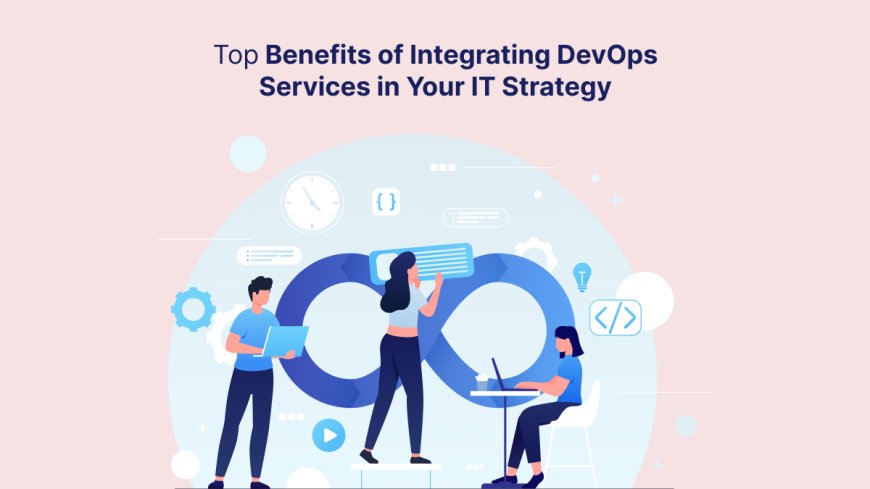
In todays fast-paced digital world, businesses are constantly looking for ways to improve their software development and IT operations. One approach that has gained significant traction is DevOps. Integrating DevOps services into your IT strategy can transform how your teams work, how quickly you deliver products, and how well you respond to customer needs. This blog will explain the top benefits of incorporating DevOps services and how it can accelerate growth, improve efficiency, and boost collaboration.
What is DevOps?
DevOps is a combination of development and operations, representing a set of practices that aim to bring together software development teams and IT operations teams. Traditionally, these two groups worked separately, which often led to communication gaps, delays, and inefficiencies.
DevOps breaks down these silos by encouraging collaboration, automation, and continuous integration and delivery (CI/CD). The goal is to create a faster, more reliable software development lifecycle where teams work closely to build, test, deploy, and monitor applications efficiently.
Why Integrate DevOps into Your IT Strategy?
Before diving into the benefits, its important to understand that integrating DevOps is not just a technology shift but a cultural and organizational change. It requires adopting new tools, processes, and mindsets that promote transparency, shared responsibility, and continuous improvement.
When done right, DevOps can bring remarkable advantages that improve the overall performance of your IT department and your business.
Top Benefits of Integrating DevOps Services
Faster Time to Market
One of the biggest advantages of DevOps is speeding up the software release cycle. By automating repetitive tasks like testing, deployment, and monitoring, teams can deliver new features and updates more quickly.
This means your business can respond faster to market changes, customer feedback, or new opportunities. Faster releases lead to better competitiveness and customer satisfaction.
Improved Collaboration Between Teams
DevOps fosters a culture of teamwork between development, operations, and other departments. Instead of working in silos, teams share goals and responsibilities.
This improved collaboration reduces misunderstandings and conflicts, enhances communication, and makes problem-solving more efficient. When everyone works together, projects move forward smoothly and faster.
Enhanced Product Quality
With continuous integration and automated testing, DevOps ensures that code changes are tested early and often. This leads to catching bugs and errors before they reach production.
As a result, the software delivered is more stable and reliable, reducing downtime and customer complaints. High-quality products improve user trust and brand reputation.
Greater Flexibility and Scalability
DevOps practices make it easier to scale applications and infrastructure according to demand. Using cloud-based tools and infrastructure as code (IaC), teams can quickly provision resources or adjust systems as needed.
This flexibility supports business growth without overloading IT resources or causing service disruptions.
Reduced Costs and Increased Efficiency
Automating processes like testing, deployment, and infrastructure management reduces manual work and human errors. This lowers operational costs and frees up staff to focus on more strategic tasks.
Additionally, DevOps helps avoid costly downtime and accelerates issue resolution, saving money in the long run.
Continuous Monitoring and Feedback
DevOps promotes constant monitoring of applications and infrastructure, providing real-time insights into performance and potential issues.
Continuous feedback loops help teams detect problems early, improve features based on user behavior, and maintain high service quality.
Better Security Practices
Integrating security into the DevOps processoften called DevSecOpsensures security is part of every stage, from coding to deployment.
Automated security testing and compliance checks help identify vulnerabilities early, making applications more secure and reducing the risk of breaches.

How DevOps Changes the Software Development Lifecycle
Continuous Integration and Continuous Delivery (CI/CD)
CI/CD is at the heart of DevOps. Continuous integration means developers frequently merge their code changes into a shared repository where automated tests run. This helps catch integration issues quickly.
Continuous delivery ensures that the tested code can be deployed to production or staging environments automatically. Together, CI/CD enables faster and more reliable software releases.
Infrastructure as Code (IaC)
IaC allows managing and provisioning infrastructure through code instead of manual processes. This means servers, networks, and configurations are automated and repeatable.
IaC increases consistency, reduces errors, and makes scaling infrastructure easier, aligning perfectly with DevOps goals.
Automation of Testing and Deployment
Automated testing ensures that new code doesnt break existing features, while automated deployment reduces human errors during release.
Automation accelerates the development process and increases confidence in software quality.
Industries That Benefit from DevOps Integration
E-commerce
E-commerce platforms require frequent updates to add features, fix bugs, and improve user experience. DevOps allows these businesses to deploy updates rapidly and reliably, keeping customers happy.
Healthcare
Healthcare apps and systems demand high security and reliability. DevOps helps healthcare providers deliver secure software with continuous monitoring to meet strict compliance standards.
Finance
Financial institutions use DevOps to accelerate development cycles while ensuring robust security and auditability, essential in managing sensitive data.
Telecommunications
Telecom companies benefit from DevOps by managing complex infrastructure and deploying new services faster to meet customer demands.
Technology and Software
Software companies adopt DevOps to stay competitive by releasing new features quickly, fixing bugs faster, and improving software stability.
Read more: How DevOps Consulting Companies Transform Your IT Operations?
Challenges and How to Overcome Them
Cultural Resistance
Adopting DevOps means changing how teams work, which can be met with resistance. Leadership support and clear communication about benefits help ease this transition.
Tool Selection and Integration
Choosing the right tools for CI/CD, monitoring, and automation can be overwhelming. Working with experienced DevOps service providers ensures proper tool integration.
Skill Gaps
DevOps requires new skills across development and operations. Investing in training or partnering with specialized agencies can bridge these gaps.
How to Get Started with DevOps Integration
Start small by identifying areas where automation and collaboration can improve processes. Set clear goals, involve all stakeholders, and gradually introduce DevOps practices.
Partnering with a DevOps service provider can guide your organization through the transformation with expert knowledge and support.
Conclusion
Integrating DevOps services into your IT strategy is no longer just an option but a necessity for businesses aiming to thrive in the digital era. The benefits are clearfaster product delivery, improved collaboration, higher quality, greater flexibility, cost savings, enhanced security, and continuous improvement. DevOps breaks down traditional barriers between development and operations, creating a culture focused on shared goals and innovation.
By adopting DevOps, businesses become more agile and responsive, capable of meeting customer demands and market changes swiftly. While the journey may have challenges like cultural shifts and skill development, the rewards far outweigh the effort. With the right approach and expert guidance, your organization can unlock the full potential of DevOps.
For companies looking to build scalable and efficient software solutions, collaborating with a skilled clone app development company that integrates DevOps into its workflows can be a game-changer. This partnership ensures your applications are delivered rapidly, operate smoothly, and evolve with your business needs.
FAQs
What is the main goal of DevOps?
DevOps aims to improve collaboration between development and operations teams to deliver software faster and more reliably.
How does automation help in DevOps?
Automation reduces manual tasks, minimizes errors, speeds up testing and deployment, and ensures consistency.
Can small businesses benefit from DevOps?
Yes, DevOps practices improve efficiency and product quality regardless of company size.
What tools are commonly used in DevOps?
Popular tools include Jenkins for CI/CD, Docker for containerization, Kubernetes for orchestration, and monitoring tools like Prometheus.
Is security included in DevOps practices?
Yes, with DevSecOps, security is integrated into every stage of the development and deployment process.