


















Maintenance Best Practices for Mud Motor Directional Drilling Tools

In todays demanding drilling environments, mud motor directional drilling is essential for precise borehole navigation, particularly in horizontal and deviated wellbores. These downhole tools are exposed to extreme mechanical stress, high-pressure fluids, and abrasive solids, making maintenance a crucial factor in both performance and longevity. Neglecting proper upkeep of mud motors can lead to reduced rate of penetration (ROP), unplanned downtime, and increased operational costs.
To optimize tool reliability and extend service life, contractors and drilling teams must adopt a systematic maintenance approach. This article explores the key maintenance best practices for mud motor directional drilling tools, from pre-job inspections to post-job overhauls, focusing on both preventive and predictive strategies.
Understanding Mud Motor Directional Drilling Tools
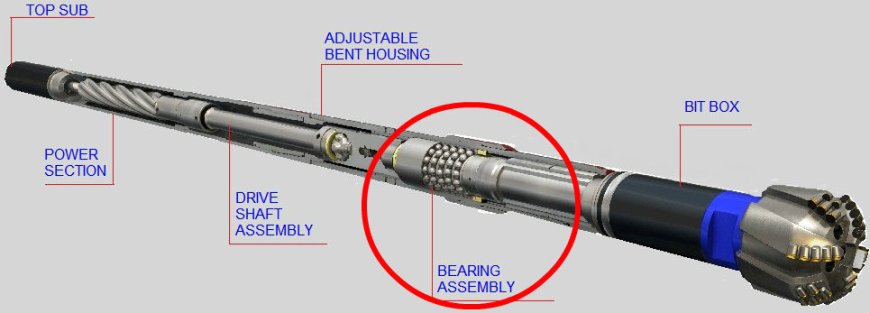
Before diving into maintenance procedures, it's essential to understand how a mud motor directional drilling system functions. These motors are positive displacement devices powered by drilling fluid (mud) pumped through the motor. The fluid activates a rotor and stator mechanism, generating rotational force at the drill bit independent of the drill string rotation. This enables precise directional control in complex well paths.
Typical components of a mud motor include:
-
Power section (rotor and stator)
-
Transmission assembly
-
Bearing pack
-
Bend housing or adjustable housing
-
Drive shaft
-
Bit box
Each of these components is exposed to wear and stress during drilling, making them prime targets for focused maintenance.
1. Pre-Job Inspection and Function Testing
Before deploying a mud motor directional drilling tool to the field, it must undergo a thorough inspection. Key pre-job steps include:
-
Visual Inspection: Look for cracks, corrosion, or deformation on all external components.
-
Bearing Pack Check: Ensure bearings rotate freely without noise or resistance.
-
Stator Elastomer Condition: Confirm that the rubber in the stator is intact and not swollen, cracked, or worn.
-
Pressure Testing: Conduct hydrostatic tests to verify tool integrity under anticipated downhole pressures.
-
Torque and Flow Test: Simulate mud flow through the motor to confirm power section output and tool responsiveness.
Function testing before dispatch ensures the tool is ready for the rig site and can reduce on-site failures dramatically.
2. Lubrication and Sealing Systems
Proper lubrication plays a critical role in the operation of the mud motor's bearing assembly. Drilling personnel should:
-
Replace or replenish lubrication systems according to manufacturer specifications.
-
Use only approved lubricants suitable for high-pressure, high-temperature (HPHT) conditions.
-
Ensure all seals are correctly installed and not worn, which could lead to mud infiltration and failure.
Leakage due to failed seals can lead to irreversible damage, especially in the transmission and bearing sections of the motor.
3. Routine Field Maintenance During Operations
When the mud motor is in use, routine checks can help detect potential failures before they escalate:
-
Torque Monitoring: Track torque values in real time. A sudden drop or spike can indicate internal damage or inefficiency.
-
Mud Properties: Ensure proper mud composition, viscosity, and flow rate to avoid stator wear and motor stalling.
-
Vibration Monitoring: Unusual vibrations may signal bearing damage or imbalance in the rotor assembly.
During drilling operations, maintaining consistent mud flow and pressure is essential to preserve motor health and performance.
4. Post-Run Disassembly and Cleaning
After retrieval from the well, a mud motor directional drilling tool should undergo complete disassembly and thorough cleaning. Key post-run procedures include:
-
Debris Removal: Eliminate all solids and residual mud from internal and external surfaces.
-
Component Wear Evaluation: Use calipers or laser measuring tools to assess wear on the rotor, stator, and drive shafts.
-
Bend Angle Inspection: Confirm that the adjustable or fixed bend angle has remained within operational limits.
Document all findings and compare them to baseline measurements from the tools service records.
5. Replacement and Rebuilding of Worn Parts
Most mud motor directional drilling systems are designed for serviceability. Regular rebuilding with OEM or certified parts extends the motor's usable life. Best practices include:
-
Replace elastomers in the stator after each run in abrasive formations.
-
Rebuild the bearing assembly and replace seals after each high-temperature job.
-
Ensure all torque specs are followed during reassembly to prevent joint failure.
Using high-quality replacement parts helps maintain motor efficiency and alignment, both of which are critical for directional control.
6. Implement Predictive Maintenance Using Data Analysis
Modern drilling operations increasingly rely on digital tools to monitor tool health. When possible, leverage data to create predictive maintenance models:
-
Analyze historical data to track performance degradation.
-
Use downhole sensors to monitor temperature, pressure, and vibration in real-time.
-
Schedule service based on operating hours, rather than fixed intervals.
Predictive strategies allow teams to supply mud motor directional drilling tools that are optimized and fail-safe, increasing uptime and efficiency.
7. Documentation and Maintenance Records
Keeping detailed records is vital to both operational consistency and tool certification. Maintenance logs should include:
-
Date and duration of each run
-
Formation types and mud properties encountered
-
Pre- and post-job inspection results
-
Components replaced or repaired
-
Technician names and QA/QC sign-off
Such documentation supports both internal process improvement and client transparency, especially in high-risk operations.
Conclusion
To ensure efficient and safe drilling operations, maintaining mud motor directional drilling tools is not optionalit is essential. A well-maintained mud motor performs better, lasts longer, and reduces operational risk on every run. By following the best practices outlined above from inspection and lubrication to predictive analytics and documentation, operators and drilling contractors can reduce failures, minimize costs, and maximize output.